
OSHA · Free course
Slips, Trips & Falls
How to prevent the most common workplace injury: what a slip, a trip, and a same-level fall are, how to recognize slip and trip hazards, housekeeping and spill…
What you’ll learn
By the end of this course.
Distinguish a slip, a trip, and a same-level fall, and why they lead workplace injuries — 1910 Subpart D
Recognize slip hazards (contamination, spills, weather, loose mats, footwear) — 1910.22
Recognize trip hazards (clutter, trailing cords, uneven surfaces, poor lighting) — 1910.22
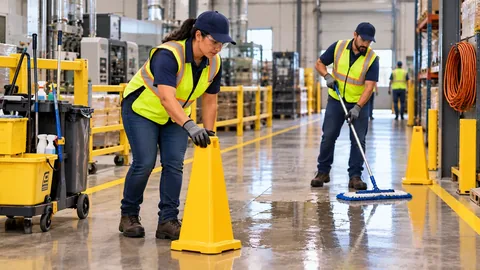
Apply housekeeping and spill response (clean, dry, orderly; mark with a wet-floor sign) — 1910.22,1910.145
Choose slip-resistant footwear and safe walking and stairway habits — 1910.136,1910.25
Report hazards you cannot fix instead of walking past them — 1910.22
References & standards
Grounded in the source material.
- 29 CFR 1910 Subpart D — Walking-Working Surfaces
- 1910.22 — General requirements (housekeeping; walkways)
- 1910.25 — Stairways
- 1910.145 — Specifications for accident prevention signs and tags
This is awareness training. It supports your program; it is not a substitute for site-specific procedures or hands-on competency where a standard requires it.
More OSHA courses
Keep building the program.
Start this course free.
EHSTEC LMS Lite is free for employers to assign — 100 safety courses, no cost. Paid plans add certificates, reporting and proof of completion.