
OSHA · Free course
Machine Guarding
How machine safeguards protect you from amputations and other machine injuries: the hazardous areas and motions to respect, the requirements a guard must meet, the…
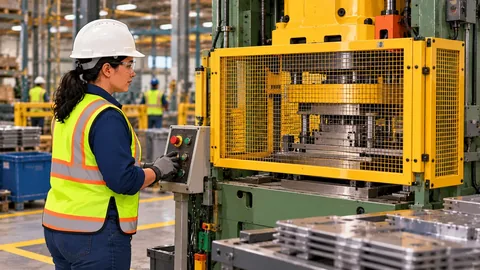
What you’ll learn
By the end of this course.
Identify the three areas where machine hazards occur (point of operation, power-transmission apparatus, other moving parts) and the hazardous motions/actions — 1910.212(a)
State the requirements a machine safeguard must meet — 1910.212(a)(2)
Describe methods of safeguarding: guards (fixed, interlocked, adjustable, self-adjusting) and devices (presence-sensing, pullback, restraint, two-hand control, safety trip) — 1910.212
Explain point-of-operation guarding and when machines must be anchored — 1910.212(a)(3),(b)
Recognize mechanical power-transmission guarding needs (belts, pulleys, gears, shafts) — 1910.219
Apply your role: never remove or bypass a guard, report missing guards, and lock out before reaching behind a guard — 1910.147 link
References & standards
Grounded in the source material.
- 29 CFR 1910 Subpart O — Machinery and Machine Guarding
- 1910.212 — General requirements for all machines
- 1910.219 — Mechanical power-transmission apparatus
- 1910.147 — Control of Hazardous Energy (servicing behind guards)
This is awareness training. It supports your program; it is not a substitute for site-specific procedures or hands-on competency where a standard requires it.
More OSHA courses
Keep building the program.
Start this course free.
EHSTEC LMS Lite is free for employers to assign — 100 safety courses, no cost. Paid plans add certificates, reporting and proof of completion.