
OSHA · Free course
Lockout/Tagout (Control of Hazardous Energy)
How to protect yourself and others from the unexpected start-up or release of hazardous energy while servicing and maintaining machines and equipment: the seven…
What you’ll learn
By the end of this course.
Explain the purpose of the Control of Hazardous Energy standard and when lockout/tagout is required — including the minor-servicing exception — 1910.147(a)
Identify the types of hazardous energy — electrical, mechanical, hydraulic, pneumatic, chemical, thermal, and gravity/stored (residual) energy — 1910.147(b)
Locate your workplace's written energy control program and the machine-specific energy control procedures — 1910.147(c)(1),(c)(4)
Distinguish the roles of authorized, affected, and other employees — 1910.147(b)
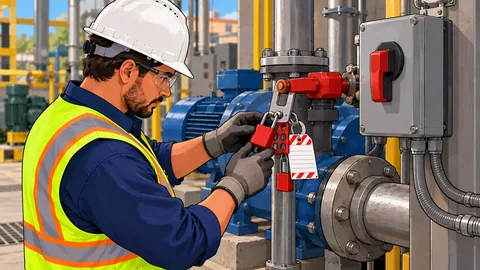
Perform the lockout/tagout sequence: prepare, notify, shut down, isolate every energy source, apply locks and tags, release stored energy, and VERIFY a zero-energy state — 1910.147(d)
Apply the rules for locks and tags (durable, standardized, identifiable; one employee, one lock, one key) and the limitations of tags — 1910.147(c)(5)
Follow the safe sequence for group lockout, shift/personnel change, and restoring energy and removing locks/tags — 1910.147(e),(f)
References & standards
Grounded in the source material.
- 29 CFR 1910.147 — The Control of Hazardous Energy (Lockout/Tagout)
- 1910.147(c) — Energy control program
- 1910.147(d) — Application of controls and lockout/tagout devices
- 1910.147(e) — Release from lockout or tagout
- 1910.147(f) — Additional requirements (group lockout, shift change, contractors)
This is awareness training. It supports your program; it is not a substitute for site-specific procedures or hands-on competency where a standard requires it.
More OSHA courses
Keep building the program.
Start this course free.
EHSTEC LMS Lite is free for employers to assign — 100 safety courses, no cost. Paid plans add certificates, reporting and proof of completion.