
OSHA · Free course
Hazard Communication (GHS)
Your Right to Understand the chemical hazards in your workplace: the written program and chemical list, GHS container labels and pictograms, safety data sheets…
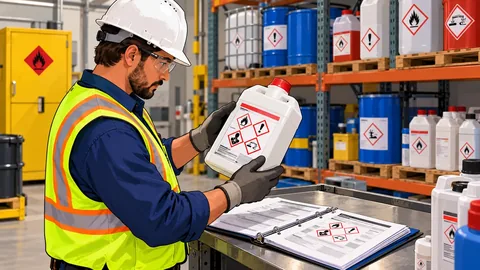
What you’ll learn
By the end of this course.
State your "Right to Understand" and when HazCom training is required (initial assignment and whenever a new chemical hazard is introduced) — 1910.1200(h)(1)
Locate the written hazard communication program, the chemical inventory list, and the safety data sheets in your workplace — 1910.1200(e),(h)(2)
Read every element of a GHS container label: product identifier, signal word, hazard statements, precautionary statements, pictograms, and supplier information — 1910.1200(f)
Identify the nine GHS pictograms and the hazards each warns of — 1910.1200(f)
Use a Safety Data Sheet and its standardized 16-section order to find hazards, first-aid, handling, and PPE — 1910.1200(g)
Distinguish physical, health, and the special hazard classes (simple asphyxiant, combustible dust, pyrophoric gas, hazards not otherwise classified) and recognize methods to detect a chemical's presence or release — 1910.1200(h)(3)(i)-(ii)
Apply the work practices, emergency/spill procedures, and PPE that protect you from chemical exposure — 1910.1200(h)(3)(iii)
References & standards
Grounded in the source material.
- 29 CFR 1910.1200 — Hazard Communication Standard
- 1910.1200(e) — Written hazard communication program
- 1910.1200(f) — Labels and other forms of warning
- 1910.1200(g) — Safety data sheets
- 1910.1200(h) — Employee information and training
- OSHA — GHS Hazard Communication Pictograms
This is awareness training. It supports your program; it is not a substitute for site-specific procedures or hands-on competency where a standard requires it.
More OSHA courses
Keep building the program.
Start this course free.
EHSTEC LMS Lite is free for employers to assign — 100 safety courses, no cost. Paid plans add certificates, reporting and proof of completion.